

New Heritage Sign for Chorley Council
Making It Happen is an initiative led by Chorley Council to showcase the positive work, investment and improvements taking place across the borough. The campaign highlights the many projects being delivered to support local communities, enhance public spaces and create a better environment for residents, businesses and visitors.
From regeneration and environmental improvements to community-focused projects, Making It Happen demonstrates Chorley Council’s commitment to investing in the borough and celebrating the people, places and initiatives that help make Chorley a thriving place to live, work and visit.
Project Overview
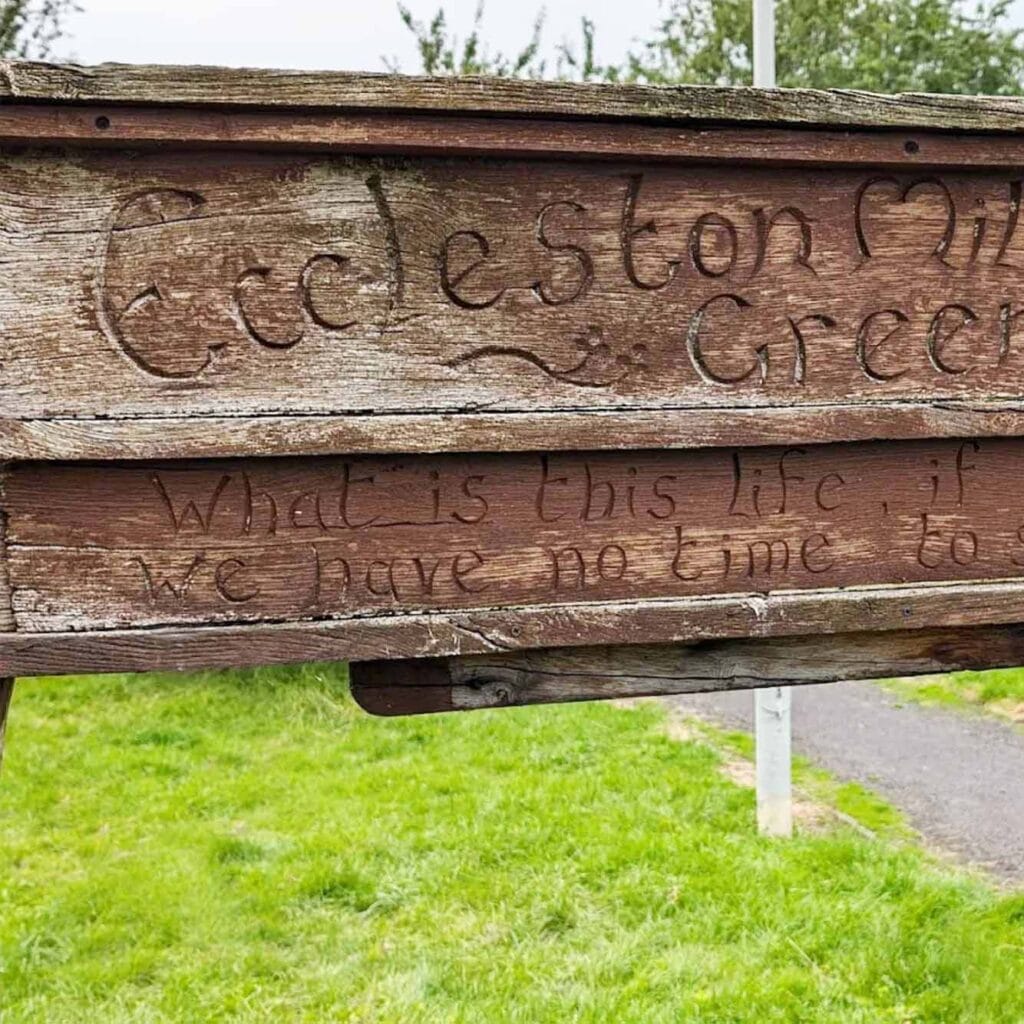
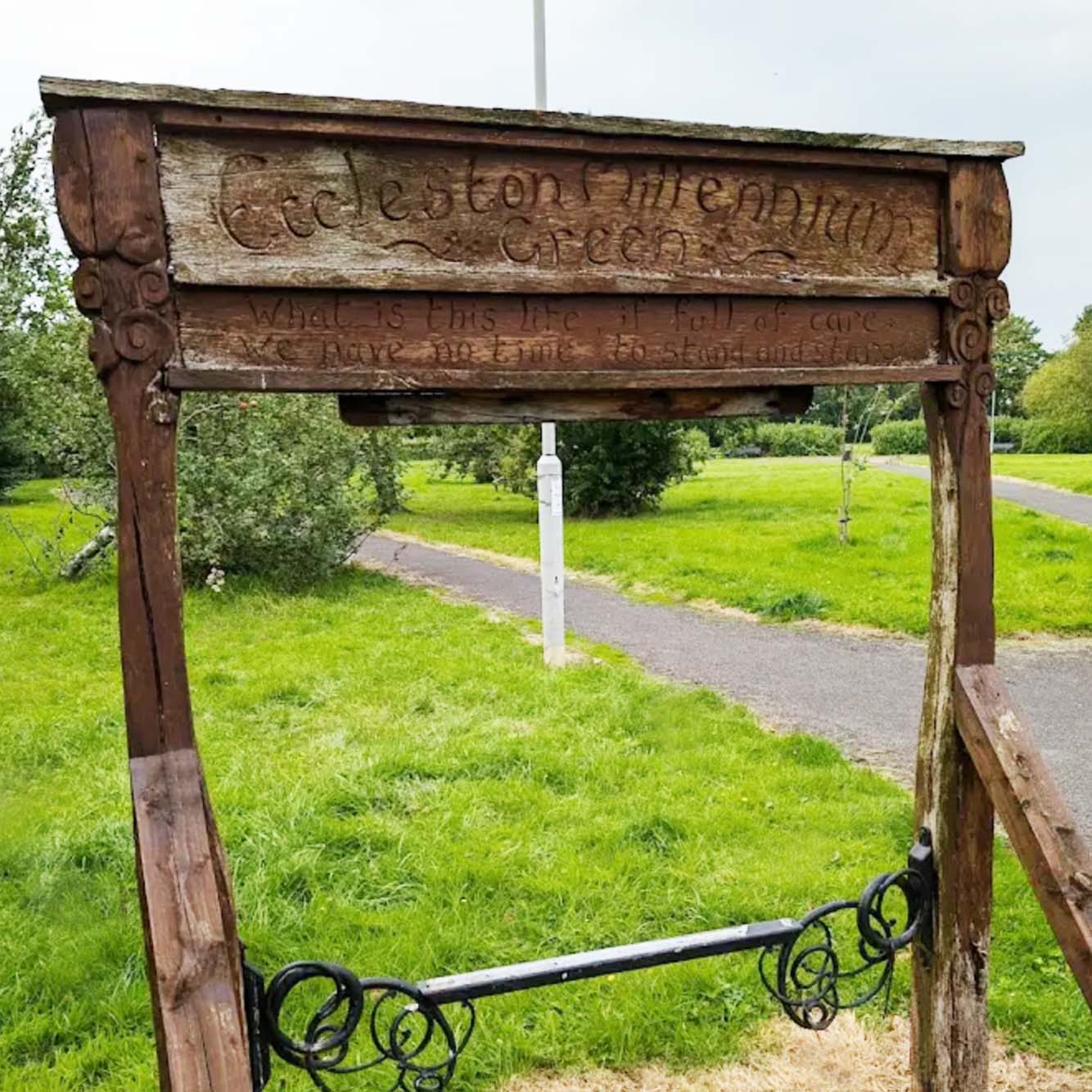
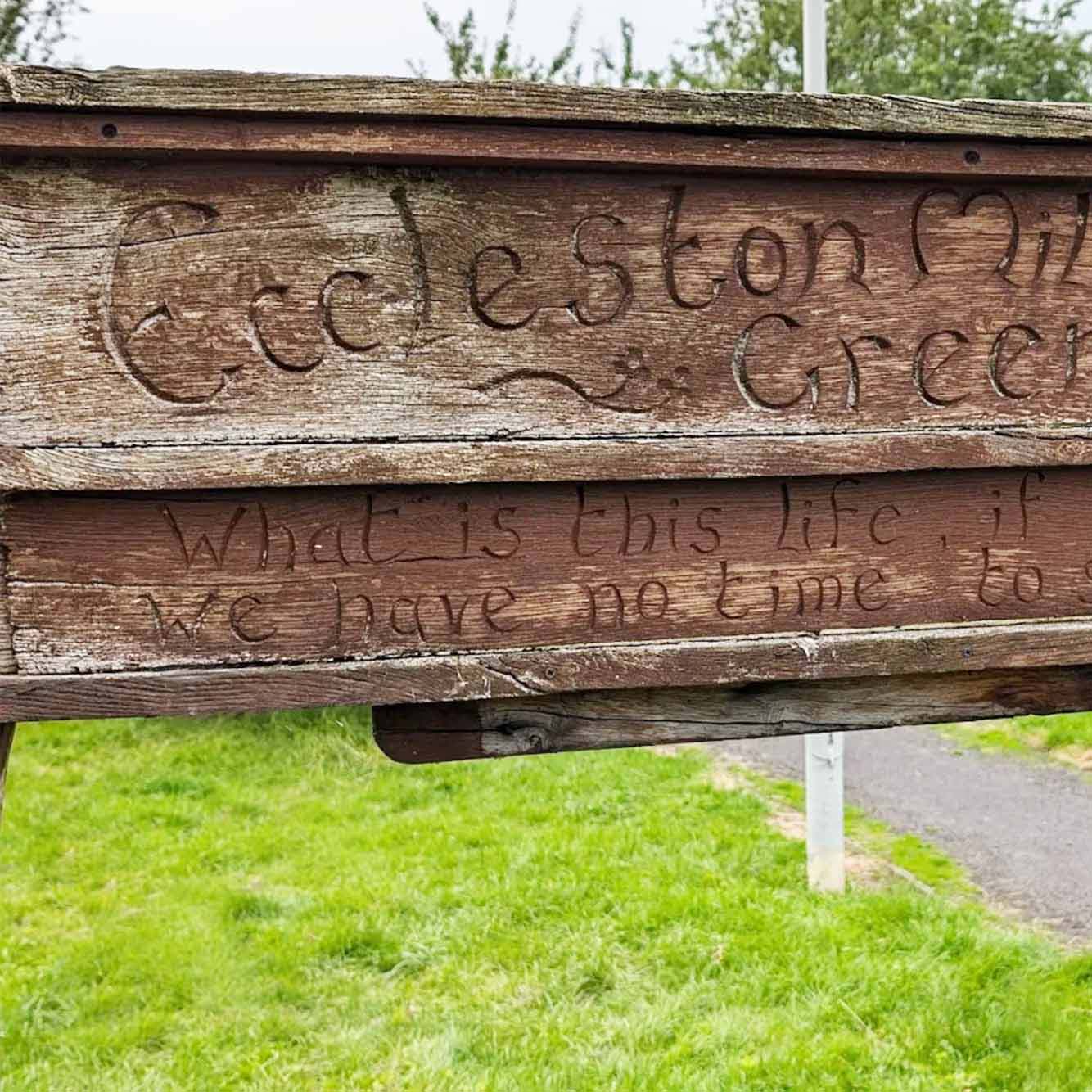
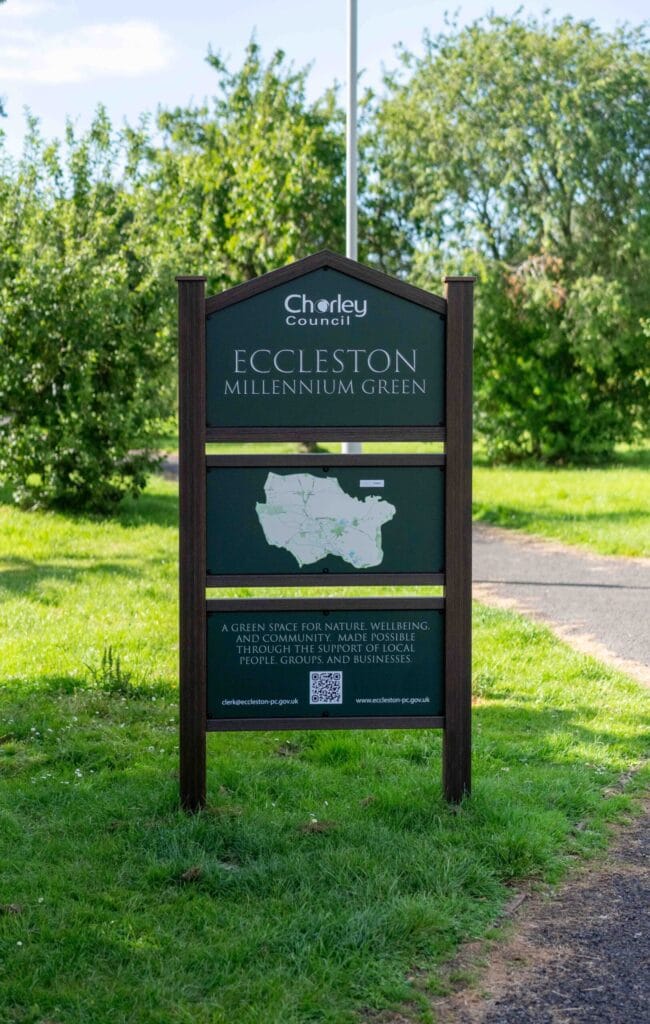
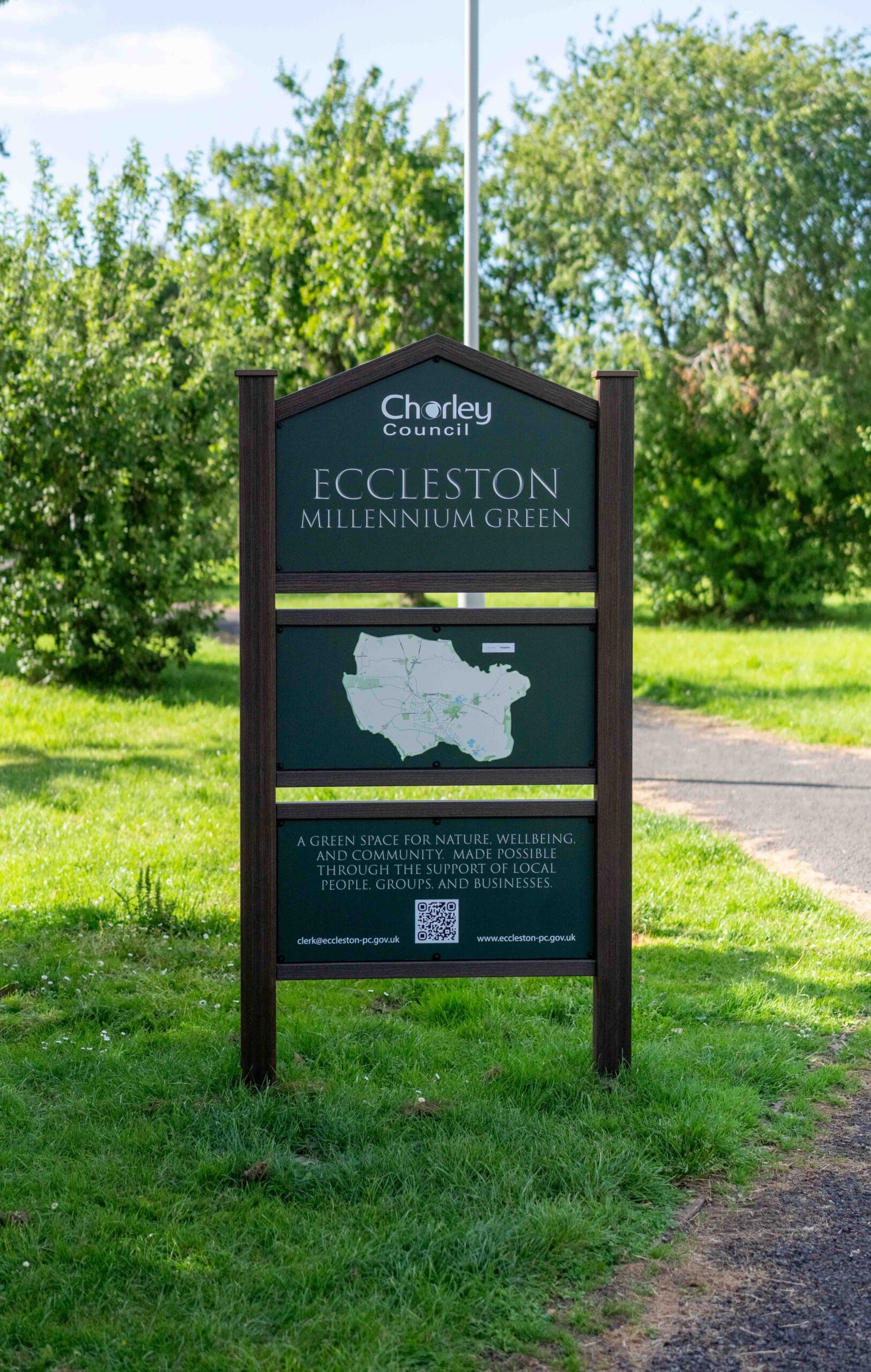
The Sign Collective was appointed by South Ribble Borough Council, on behalf of Chorley Council, to design and deliver a new wayfinding sign for Millennium Green in Eccleston. The project involved replacing an existing entrance sign with a more accessible, informative and sustainably sourced solution to help visitors navigate the network of walking routes throughout the village.
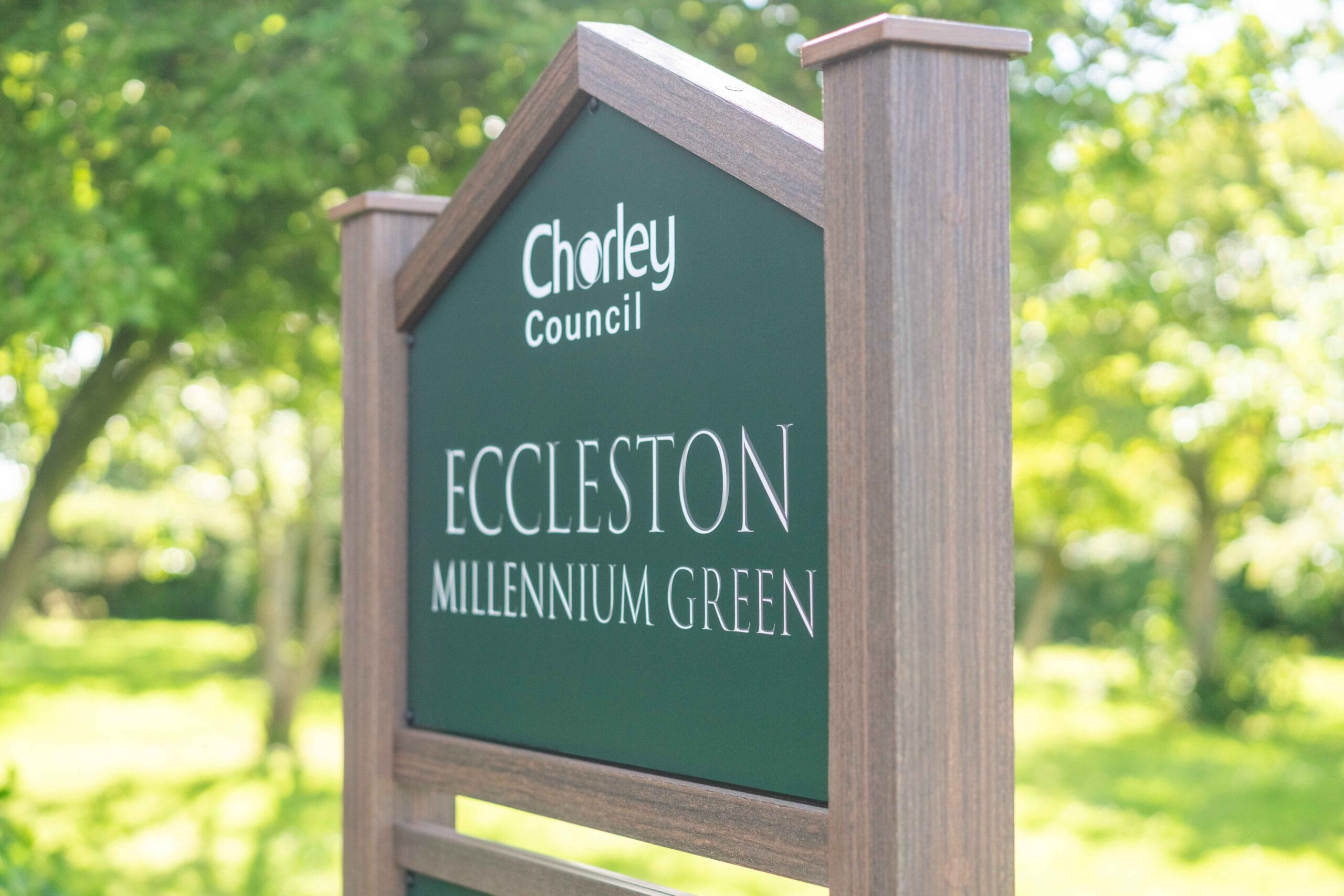
Managing the project from design through to installation, we worked closely with the council to develop a bespoke heritage style stack sign that combined clear wayfinding with a frame manufactured from 100% recycled plastic. The result is a welcoming entrance feature that complements its natural surroundings while supporting the council’s sustainability objectives.
Services Provided

Consultation

Site Survey

Cartographic Redraw

Sustainable Material Sourcing

Installation

Project Management
The Brief
South Ribble Borough Council, on behalf of Chorley Council, required a replacement entrance sign at Millennium Green that delivered a clearer, more accessible and environmentally responsible wayfinding solution.
The sign needed to provide visitors with an easy-to-understand overview of the walking routes throughout Eccleston, while clearly identifying key landmarks and points of interest. As a commissioned heritage style feature, it also needed to reflect the character of Millennium Green and present a traditional appearance that sat comfortably within the surrounding landscape.
Sustainability was a key requirement, with the council specifying that the sign should be manufactured using responsibly sourced materials suitable for long-term outdoor use. The challenge was to present a large amount of information in a clear and intuitive format that remained easy to read for visitors of all ages.

Our Approach
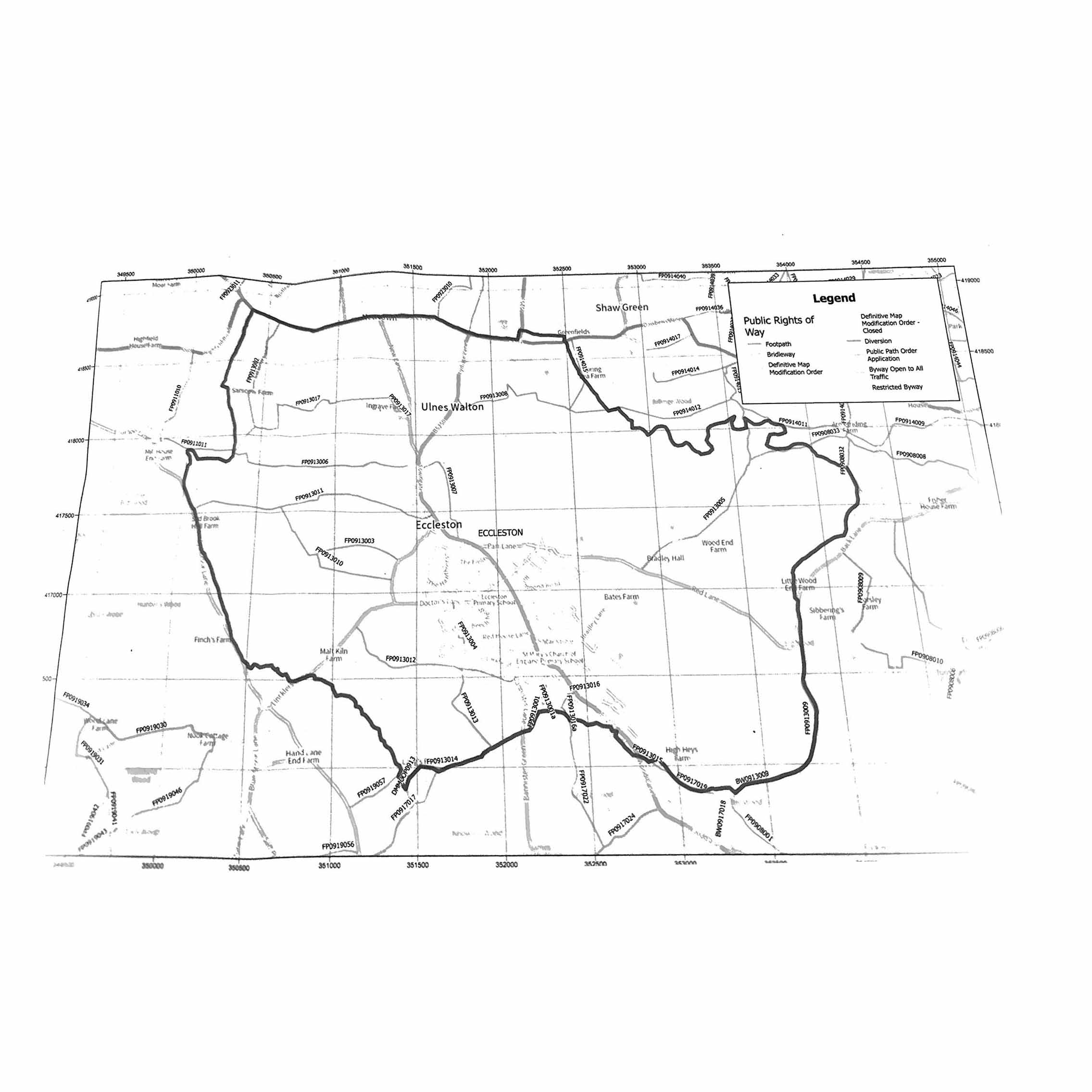
We began the project by reviewing a technical drawing sent by the client, showing the network of walking routes and local landmarks across Eccleston.
Rather than reproducing the drawing directly, we recreated the map digitally from scratch. This allowed us to simplify complex information, establish a clear visual hierarchy and improve overall legibility while retaining the accuracy of the original data.
The cartographic redraw was a detailed process that required careful attention to each route, landmark and reference point. By rebuilding the map in this way, we created a clearer and more intuitive experience for visitors using the sign.
Alongside the mapping, we developed the specification of the heritage style sign to ensure it aligned with the council’s sustainability objectives while maintaining durability, longevity and visual quality.




The Solution
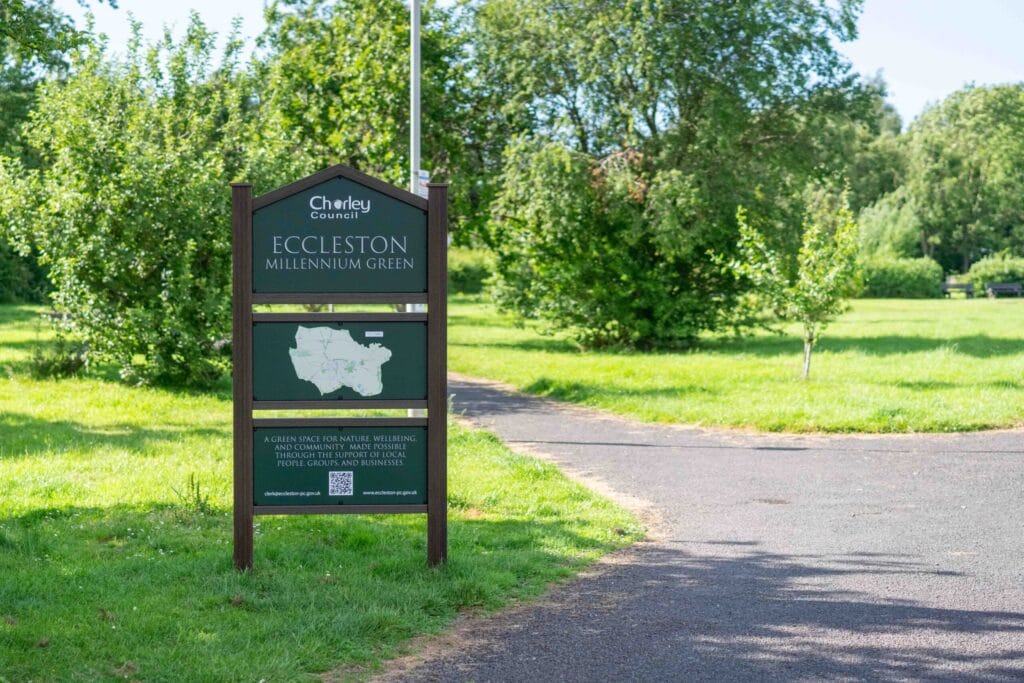
The final design centred around a bespoke heritage style stack sign that provides visitors with a clear overview of Eccleston’s walking routes while acting as a welcoming entrance feature to Millennium Green.
The digitally redrawn map presents footpaths and local landmarks in a simplified, structured format, allowing visitors to orientate themselves quickly and plan their route with confidence. Thoughtful use of hierarchy, spacing and typography ensures key information is easy to interpret without overwhelming the viewer.
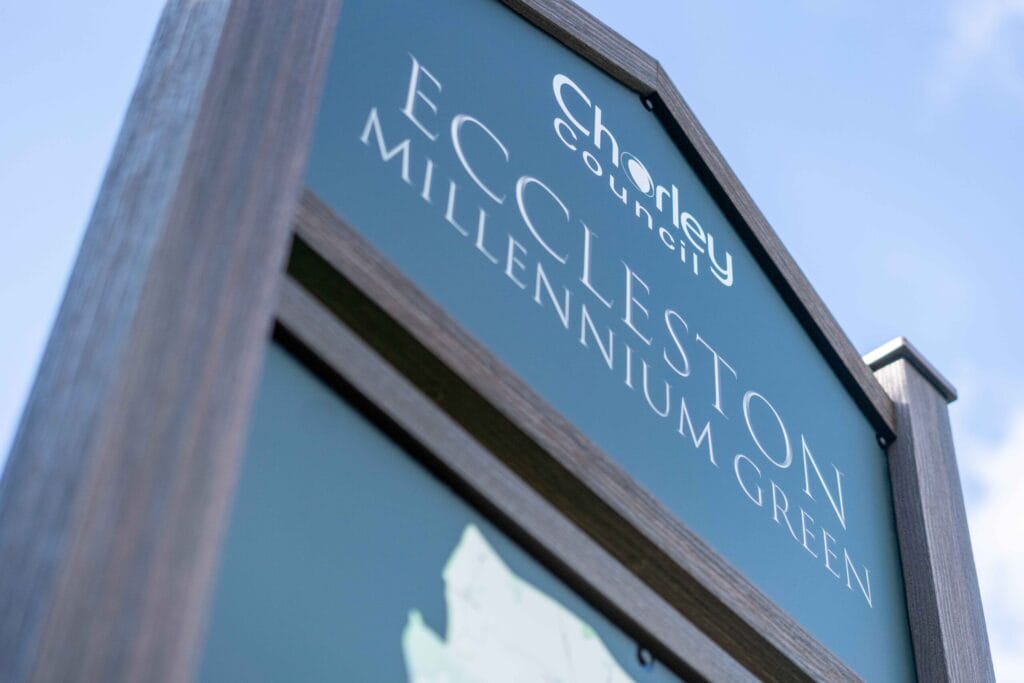
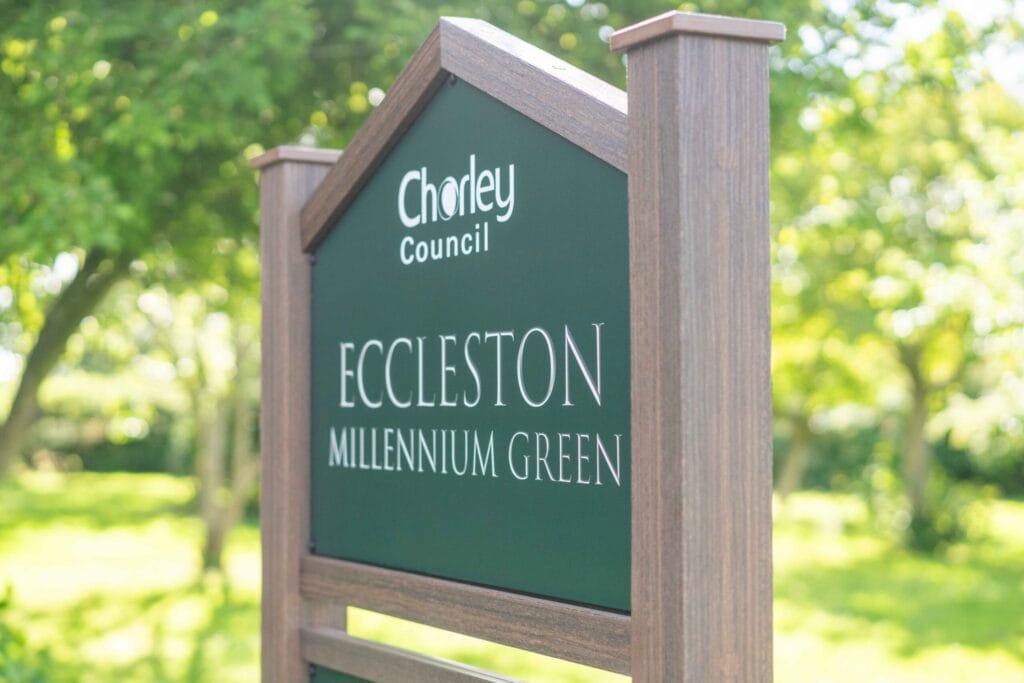
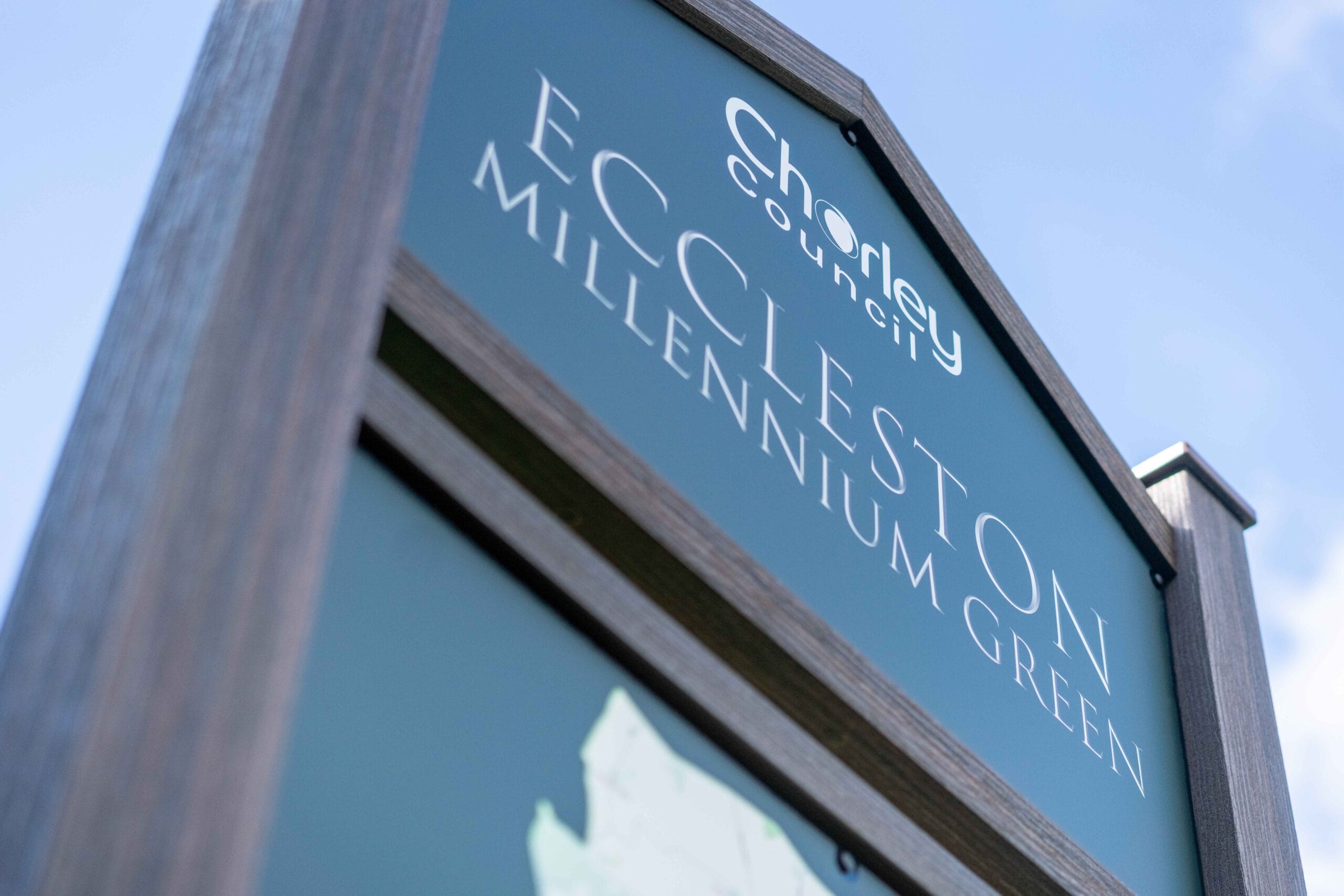
Sustainability played an important role throughout the project. To meet the council’s requirements, we worked with a specialist supplier to provide a bespoke sign frame manufactured from 100% recycled plastic. Finished with a realistic wood grain effect, the frame delivers the appearance of traditional timber while offering improved durability, reduced maintenance and a longer service life, making it well suited to an outdoor public setting.
The result is a robust wayfinding solution that combines a traditional appearance with modern sustainable materials, complementing the surrounding landscape while supporting the council’s environmental goals.











The Outcome
The completed entrance sign provides Millennium Green with a clear, attractive and accessible wayfinding feature that enhances the visitor experience while respecting its natural setting.
Visitors can now navigate the network of walking routes with greater ease and identify local landmarks more confidently, making the area more accessible and enjoyable to explore.
The heritage style sign frame, manufactured from 100% recycled plastic, supports the council’s commitment to environmentally responsible public infrastructure while delivering the traditional aesthetic required for the project.
By combining considered information design with carefully selected sustainable materials, we delivered a durable wayfinding solution that is practical, visually in keeping with its surroundings and designed to provide many years of reliable use.
Exceptional service! This company goes above and beyond to meet their customers’ needs. I couldn’t be happier with the results.
Jordan Smith
Let’s Talk Signage
Whether you are replacing existing wayfinding or developing signage for parks, green spaces or visitor attractions, we can help.
From initial consultation and design through to production and installation, we manage the full process to deliver signage that is clear, durable and tailored to the needs of its users.
Get in touch to discuss your project and discover how we can help create signage that improves navigation, enhances visitor experience and stands the test of time.